

Probiotics vs Prebiotics: What’s the Difference and Do You Need Both?
Quick answer: Probiotics are the live, beneficial bacteria you bring into your gut. Prebiotics are the fibre that feeds the good bacteria already living there. Think of one as the seed and the other as the soil — and yes, you genuinely need both. Taking probiotics without prebiotics is a bit like planting seeds in bare concrete; they might survive the journey, but they’ve got nothing to grow in.
If that’s all you needed to know, you can stop there. But if you’d like to understand why this matters for your digestion, your energy, your skin and even your mood, keep reading — we’ll break it down properly, without the science lecture.
Watch our short video to learn more. Please enjoy and remember to like, comment, share and subscribe!
What Are Probiotics, Exactly?
Probiotics are living microorganisms — mostly strains of bacteria — that top up the population of “friendly” bugs in your gut. Your digestive system is already home to trillions of them, quietly working away at digesting food, supporting your immune defences and even influencing how you feel day to day.
Life doesn’t always play fair with this delicate ecosystem, though. A course of antibiotics, a stressful few months, poor sleep, or a diet leaning too heavily on processed food can all knock your gut bacteria out of balance. Probiotics are one of the most direct ways to help redress that balance, particularly if you’re over 30, since our natural production of beneficial bacteria tends to slow with age.
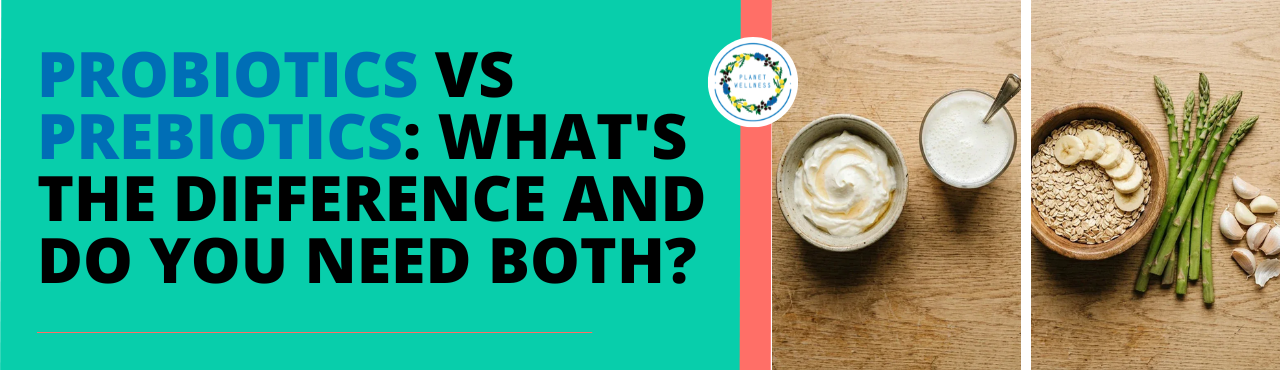
You’ll find probiotics naturally in fermented foods such as live yoghurt, kefir, sauerkraut and kimchi, or in a good quality supplement when food alone isn’t cutting it.
What Are Prebiotics, Exactly?
Prebiotics aren’t alive at all — they’re a type of fibre that your body can’t digest, but the bacteria in your gut absolutely thrive on. Every time you eat a prebiotic-rich food, you’re essentially feeding the good bacteria that are already there, helping them multiply and do their job more effectively.
You’ll find prebiotics in foods like onions, garlic, leeks, oats, bananas, and asparagus, though most of us fall well short of the fibre our gut actually needs. The general guidance is to aim for around 30 grams of fibre a day from a wide range of fruit, vegetables, and wholegrains — and for most people, that’s a genuinely tall order without a bit of extra help.
The Key Difference, In Plain English
Here’s the distinction stripped right back:
- Probiotics = live bacteria you introduce to your gut
- Prebiotics = fibre that feeds the bacteria already living in your gut
- Probiotics work best when there’s something for them to “eat” once they arrive
- Prebiotics work best when there are enough good bacteria there to make use of them
Neither one replaces the other. They’re two halves of the same job.
Why You Really Need Both
This is the part that gets missed most often. People will happily take a probiotic supplement for a few weeks, see no dramatic change, and give up — without realising that the bacteria they’ve introduced may have had very little to feed on once they got there.
A gut with plenty of good bacteria but no fibre to sustain them is a bit like hiring a brilliant team and then giving them no tools to work with. Meanwhile, a gut that’s rich in fibre but low in good bacteria to begin with simply doesn’t have enough hands on deck to make use of it.
Pairing the two — sometimes called a “synbiotic” approach — gives your gut both the workforce and the resources it needs to thrive.
Signs Your Gut Might Be Asking for Help
A few common signals worth paying attention to:
- Bloating or discomfort after meals, even “healthy” ones
- Irregular bowel movements, whether that’s constipation or the opposite
- Skin that flares up or won’t settle, however careful you are with products
- Energy dips that don’t match your sleep or activity levels
- Frequent colds, given that a large share of your immune system lives in the gut
- Sugar or carb cravings that feel hard to shake
None of these on their own mean disaster, but together they’re often your gut asking for a bit more support.
Getting Them From Food First
Where possible, food should always be your starting point. A rough guide:
For probiotics, look to live yoghurt, kefir, sauerkraut, kimchi and miso — anything genuinely fermented rather than simply flavoured to taste that way.
For prebiotics, lean on garlic, onions, leeks, oats, bananas (particularly slightly underripe ones), asparagus and pulses.
The trouble is, eating enough of both, every single day, consistently, is genuinely difficult for most people balancing work, family and everything else life throws at you. That’s not a failure of willpower — it’s simply a lot of chewing.
When Food Alone Isn’t Enough
This is where a well-formulated supplement can bridge the gap sensibly, rather than replace real food altogether. A daily probiotic gives your gut a reliable, measured dose of the beneficial strains that matter most, while a fibre supplement helps you close the gap between what you’re actually eating and the roughly 30 grams a day your gut is asking for.
We often recommend pairing the two together rather than picking one — it’s simply a more complete way of supporting your gut than either on its own.
This is a recording of our Wellness Wednesday presentation to a group of attendees who learnt how to eat healthier and ensure all meals are digested and expelled effectively.
Please enjoy and remember to like, comment and subscribe!
The Bottom Line
Probiotics and prebiotics aren’t rival products competing for a place in your cupboard — they’re teammates. One repopulates the good bacteria, the other feeds them. Support your gut with both, alongside whole, natural food where you can, and the knock-on benefits — steadier energy, calmer digestion, clearer skin, a sturdier immune system — tend to follow.
TAKE THE NEXT STEP
Free consultation
Ready to take control of your health?
Book a free one-to-one consultation with our wellness clinic and discover a personalised, root-cause approach to your wellbeing — no generic advice, just a plan built around you.

FREE RESOURCES
What Your Eyes Can Reveal About Your Health — Download your free guide
Why Have an Iridology Consultation — Download your free guide
RECOMMENDED FOR YOU
Gut Health support from USANA
Give your gut the full picture — friendly bacteria and the fibre to feed them — with USANA’s dedicated gut health range, carefully formulated to work together rather than in isolation.
- USANA Digestive Infusion
- USANA Fibergy Active
- USANA Gut Health Deluxe Pack
- USANA Gut Health Premium Pack
- USANA Healthy Body Premium Pack
KEEP READING
Want to learn more about managing your health naturally? These articles are a great place to continue.
➔ What Is Leaky Gut Syndrome — and Is It Real?
➔ 10 Signs Your Gut Health Needs Attention
➔ Can Iridology Detect Leaky Gut?
➔ How To Treat Digestive Issues Using Iridology
Disclaimer: This article is for educational purposes only and is not intended to diagnose, treat, or replace professional medical advice. Please consult a qualified healthcare provider for further guidance. Planet Wellness practitioners draw on over 50 years of natural health experience using Iridology, Nutrition, and Kinesiology.