

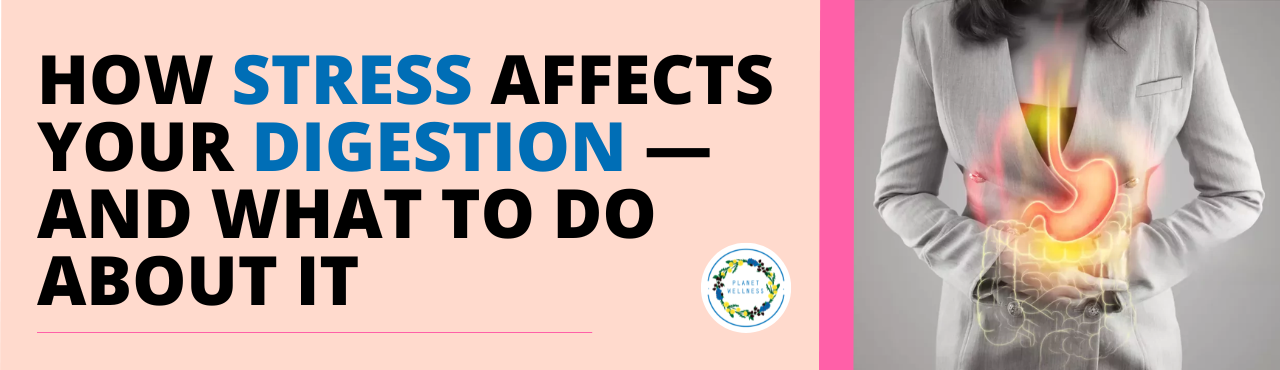
How Stress Affects Your Digestion — and What to Do About It
Short answer: stress affects your digestion by interfering with the nerve signals that keep your gut running smoothly. It slows digestive secretions, changes how quickly food moves through you, and unsettles the balance of bacteria that keeps everything working well. That’s why a tense week so often shows up as bloating, a tight stomach, irregular bowels, or symptoms you thought you’d already sorted making a comeback.
The good news is that the same connection works in reverse. Because your gut and your nervous system are so closely wired together, calming one genuinely does calm the other — and most of what helps is simple, gentle, and easy to build into daily life. Here’s what’s actually going on, and what you can do about it.
Did you know that stress can have a direct impact on your skin’s health and appearance? In this video, we dive into how emotional and physical stress can lead to breakouts, premature ageing, dullness and flare-ups of common skin conditions.
Why Your Gut Feels Everything You Feel
Your digestive system has its own nervous system running through it, often nicknamed the “second brain”. It’s in constant conversation with your actual brain via the vagus nerve, which is why nerves before a big meeting can leave you needing the loo, and why a difficult week can leave your stomach in knots.
When you’re stressed, your body prioritises survival over digestion. Blood is redirected towards your muscles and heart, ready to deal with whatever’s coming. Digestion, quite sensibly from your body’s point of view, gets bumped down the priority list. The trouble is, in modern life the “threat” is rarely a single, short burst — it’s a looming deadline, a difficult relationship, or a constantly full inbox. Your gut ends up running on the back foot for weeks at a time.
What Actually Happens Inside You When You’re Stressed
Digestion slows down or speeds up
Stress can suppress the release of stomach acid and digestive enzymes, making meals sit heavily and food harder to break down properly. For others, stress does the opposite and speeds up the gut, which is why some people find themselves running to the bathroom when they’re anxious. Either way, the rhythm your digestion normally relies on gets thrown off.
Your gut bacteria shift out of balance
The trillions of bacteria living in your gut are remarkably responsive to stress hormones. Ongoing tension can shift this community towards less favourable strains, which is often behind the bloating, wind, and general “off” feeling that turns up during stressful periods, even when nothing about your diet has changed.
The gut lining becomes more sensitive
Chronic stress can make the gut wall more reactive and permeable, meaning it’s quicker to react to foods it would normally tolerate perfectly well. This is one reason food sensitivities often seem to appear, or worsen, during particularly stressful chapters of life.
Old symptoms find their way back
If you’ve ever managed a digestive complaint, stress is a classic trigger for it to resurface. IBS, acid reflux, and general “nervous stomach” symptoms are all well known for flaring in step with life’s more demanding periods.
Signs Your Digestion Might Be Stress-Related
- Bloating or discomfort that tends to build alongside tension, deadlines, or worry
- Appetite that swings between not wanting to eat and wanting to eat everything
- Symptoms that ease noticeably on holiday or during calmer weeks
- A stomach that reacts to situations, not just to specific foods
- Sleep difficulties running alongside digestive niggles
What to Do About It
You don’t need to overhaul your entire life to help your gut cope with stress. Small, consistent changes to how you eat and how you manage tension tend to make the biggest difference.
Slow down at mealtimes
Eating on the move, at your desk, or while distracted keeps your body in a slightly alert state, which isn’t ideal for digestion. Even two minutes of sitting down properly, taking a few slower breaths, and chewing thoroughly signals to your body that it’s safe to switch into “rest and digest” mode.
Give your nervous system a daily reset
A few minutes of slow, deep breathing, a short walk outdoors, or a bit of gentle stretching each day helps bring your nervous system out of high alert. This isn’t about eliminating stress entirely — that’s rarely realistic — but about giving your body regular, reliable pockets of calm to counterbalance it.
Feed your gut well
A varied diet rich in fibre, from vegetables, fruit, oats, and pulses, helps keep things moving and supports the friendlier bacteria in your gut. Fermented foods such as live yoghurt, kefir, or sauerkraut can also be a gentle, natural way to support that balance. Keeping meals regular, rather than skipping and then overeating, gives your digestion a steadier rhythm to work with.
Move your body regularly
Regular movement, even a brisk daily walk, helps food travel through your system properly and is a well-known outlet for stress hormones. It doesn’t need to be intense to be effective; consistency matters far more than intensity here.
Get a proper picture of what’s going on
Because gut symptoms can have several contributing factors, it’s worth getting a wider view of your health rather than treating each symptom in isolation. An iridology consultation looks at your whole constitution, not just your digestion, and can help highlight patterns worth paying attention to alongside practical lifestyle and nutritional support.
Ronald was a regular guest on The Chrissy B Sky TV Show a few years ago.
Watch, learn, enjoy and share our video with anyone else who is interested.
The Bottom Line
Your gut and your nervous system are in constant dialogue, which means stress is rarely “just in your head” when it comes to digestion — and it also means you have real, practical influence over how your gut copes with a demanding life. Slowing down at meals, giving your nervous system a daily reset, and supporting your gut with the right foods can make a genuine difference, often within a matter of weeks.
If your digestion has been unsettled for a while and you’d like a clearer picture of what might be behind it, we’re always happy to help you get to the bottom of it.
TAKE THE NEXT STEP
Free consultation
Ready to take control of your health?
Book a free one-to-one consultation with our wellness clinic and discover a personalised, root-cause approach to your wellbeing — no generic advice, just a plan built around you.

FREE RESOURCES
What Your Eyes Can Reveal About Your Health — Download your free guide
Why Have an Iridology Consultation — Download your free guide
RECOMMENDED FOR YOU
Gut Health support from USANA
Give your gut the full picture — friendly bacteria and the fibre to feed them — with USANA’s dedicated gut health range, carefully formulated to work together rather than in isolation.
- USANA Digestive Infusion
- USANA Fibergy Active
- USANA Gut Health Deluxe Pack
- USANA Gut Health Premium Pack
- USANA Healthy Body Premium Pack
KEEP READING
Want to learn more about managing your health naturally? These articles are a great place to continue.
➔ 10 Signs Your Gut Health Needs Attention
➔ What Is Leaky Gut Syndrome — and Is It Real?
➔ What Exactly Does Meditation Do?
➔ What do you mean by mindfulness?
Disclaimer: This article is for general information and does not replace advice from a qualified healthcare professional. If bloating is severe, sudden, or accompanied by other symptoms, please see your GP. Planet Wellness practitioners draw on over 50 years of natural health experience using Iridology, Nutrition, and Kinesiology.