

Can Iridology Detect Diabetes?
Yes — iridology can pick up early warning signs that point towards diabetes, sometimes years before a blood test confirms it. By reading the markings, colour and texture of the iris, a trained iridologist can spot a distinct “sugar ring” around the pupil that flags a body under strain from excess blood sugar. It’s not a replacement for a blood test, but it is a gentle, non-invasive early warning system that lets you take action long before symptoms creep in.
Let’s take a closer look at how this works, what your iridologist is actually looking for, and why so many people are turning to iridology as part of a proactive, whole-body approach to their health.
Do You Know If Iridology Can Detect Diabetes?
Diabetes affects at least one in ten persons worldwide. It would therefore be very useful if Diabetes or Pre-Diabetes can be detected early so that it can be prevented or treated.
What Exactly Is Iridology?
Iridology is the study of the iris — the coloured part of your eye — to understand what’s going on elsewhere in the body. It’s a non-invasive practice, no different in feel to having your photograph taken. Some practitioners still use the traditional torch and magnifying glass, much like doctors once did, while more modern iridologists (us included) use a specialist Iridology camera to capture a detailed, high-resolution image of the iris.
Every iris is as individual as a fingerprint. The fibres, colours and patterns you see are shaped by genetics, lifestyle, stress levels, and even what you eat and how well you digest it. Over the last 300 years, iridology has developed into a genuinely insightful tool for understanding these underlying patterns.
How the Eyes Reflect What’s Happening in the Body
The iris is packed with over 28,000 nerve endings, all connected back to the rest of the body. Think of it as a constantly updating notice board — your body is forever sending signals to the iris, and those signals show up as markings, colours and rings.
Iridologists work from an Iridology Chart, built up from the study of a million pairs of eyes, with separate maps for the left and right eye. This allows a practitioner to pinpoint which organ or system a particular marking relates to. If you’d like to understand more about what these markings can reveal more broadly, our blog on what iridology can tell you is a great place to start.
What a “Sugar Ring” Actually Looks Like
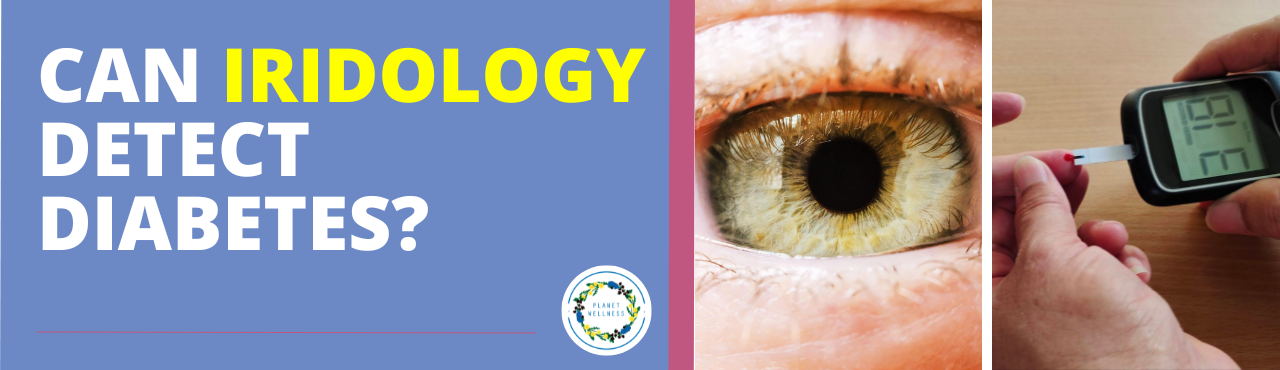
When it comes to diabetes specifically, iridologists look for a distinct ring that forms around the outer edge of the pupil. This is often referred to as a sugar ring, and it’s one of the clearer signs an iridologist can identify.
Location and Colour
The ring typically sits just outside the pupil, in the zone associated with the pancreas and digestive organs. It can appear as a subtly darker or more defined band than the surrounding iris tissue.
Severity and Thickness
The thickness of the ring tends to correspond with how advanced the imbalance is. A finer, lighter marking may suggest an early tendency towards blood sugar issues, while a thicker, more pronounced ring often indicates a more established pattern that deserves closer attention.
Why the Pancreas Isn’t Always to Blame
It’s a common misconception that diabetes is purely a pancreas problem. In our experience, that’s rarely the full picture. When we examine the iris — and the sclera, the white of the eye, which we also assess — we’re often able to see stress showing up in the liver, digestive system and lymphatic pathways too.
This is one of the real strengths of iridology: it doesn’t isolate one organ in a vacuum. It looks at the body as a connected, whole system, which fits naturally with a wellness approach that treats the person, not just the symptom.
Iridology and Blood Tests: Working Together
Opticians and optometrists have long been able to spot signs of diabetes, cataracts and glaucoma simply by examining the eyes — proof that the eyes genuinely do reveal a great deal about our internal health. Iridology works on a similar principle, just with a wider lens.
It’s worth being clear: an iridology consultation cannot diagnose diabetes outright. What it can do is flag a tendency early, so a proper blood test can confirm it. If a sugar ring is spotted, we’ll always recommend a follow-up blood test to confirm your blood sugar readings. You can read more about the condition itself in our blog, What is Diabetes?, or explore the different presentations in What are the different types of Diabetes?.
Why Catching It Early Matters
Diabetes is notoriously quiet in its early stages. Many people live with rising blood sugar for months, sometimes years, before symptoms become noticeable enough to prompt a GP visit. By that point, the body has often been under strain for a considerable while.
This is exactly where iridology earns its place. A yearly check-up — or more frequent visits if you’re managing a chronic condition — gives you a head start. Rather than waiting for symptoms to force your hand, you’re able to make dietary and lifestyle changes while your body still has plenty of capacity to respond and recover.
What Happens During an Iridology Consultation
- A detailed photograph or examination of both irises, plus the sclera
- Comparison against the Iridology Chart to identify areas of the body under strain
- A discussion of any markings found, including sugar rings, toxicity patterns or organ weaknesses
- Personalised nutrition and lifestyle recommendations based on what your eyes reveal
Because our practitioners are nutritionists as well as iridologists, you don’t just walk away with an observation — you leave with a practical, natural plan. That might include specific foods to introduce, others to reduce, and simple lifestyle shifts that support your pancreas, liver and digestive system together.
A Natural, Whole-Person Approach to Diabetes
One of the most common myths we hear from clients is that anything remotely sweet — including fruit and many vegetables — must be avoided the moment diabetes is mentioned. This simply isn’t accurate, and it can lead people towards a restrictive, joyless way of eating that doesn’t actually address the root cause.
Instead, we focus on identifying what your body specifically needs based on what your eyes reveal. If you’d like a deeper dive into how iridologists build up this picture, our article on how to use iridology to spot diabetes walks through the process in more detail.
In this video, you will learn what Iridology is and how important the iris is. Find out how understanding the markings in your iris can help you with Diabetes or avoid it.
How Can Iridology Help Me?
Have you ever wondered what your eyes can reveal about your health? In this video, we explore the powerful world of Iridology — a non-invasive method of analysing the iris to gain insights into your body’s strengths, weaknesses, and overall well-being.
The Bottom Line
So, can iridology detect diabetes? It can certainly detect a tendency towards it, often well before symptoms or a standard check-up would. Combined with a proper blood test to confirm any findings, it gives you a genuinely useful early warning system — one that puts the power to act sooner firmly back in your hands.
TAKE THE NEXT STEP
Free consultation
Ready to take back control of your health?
Book a free one-to-one consultation with our wellness clinic and discover what your eyes could be revealing about your health — no generic advice, just insights built around you.
Book your free consultation

FREE RESOURCES
Free ebook — Benefits of Having an Iridology Consultation
A practical, no-fuss guide covering what an iridology consultation involves and how it can help you understand your health — written in plain English, with real insight you can use today.
Download free ebook
Free ebook — What Your Eyes Can Reveal About Your Health
Discover how the markings, colours and patterns in your iris can offer a window into your wellbeing. This guide makes understanding your eyes genuinely fascinating.
Get your free copy
KEEP READING
Want to learn more about iridology? These articles are a great place to continue.
- What is Diabetes?
- What are the different types of Diabetes?
- How To Use Iridology To Spot Diabetes
- Is Iridology Accurate?
- What Iridology Can Tell You
- How Iridology Works
Disclaimer: The information provided in this article is for educational purposes only and is not intended as medical advice. Always consult a qualified healthcare professional before making changes to your diet, supplement regimen or health programme. Planet Wellness practitioners draw on over 50 years of natural health experience using Iridology, Nutrition and Kinesiology.